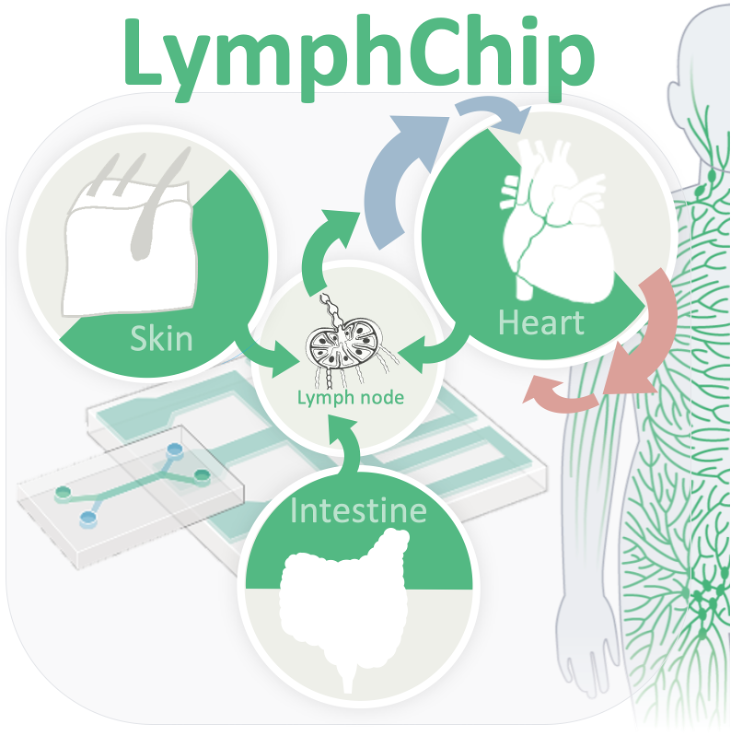


Less than 1 in 15 drug candidates from preclinical studies succeed in clinical trials, partly due to the lack of lymphatics and immune cells in current in-vitro models and the limitations of animal testing. LymphChip aims to revolutionize drug research by developing advanced Organ-on-Chip models for the heart, skin, and gut—supplemented with human lymphatics and immune cells. These human-based animal-free models better mimic human physiology and disease, improving drug testing for conditions like myocardial infarction, obesity, Crohn’s disease, inflammatory bowel disease, eczema, and fibrosis. hDMT researchers with expertise in biology, engineering, and microfluidics have teamed up to develop the advanced systems, including read-out technologies to monitor and validate the models. The LymphChip project promises more reliable, human-relevant insights into drug efficacy and disease mechanisms.
hDMT financially contributes to the project through help with the organization and lecturing at summer schools, workshops and open days and through the preparation of dissemination booklets for the scientific and R&D community. The hDMT Vessels-on-Chip, Heart-on-Chip and Gut/Liver-on-Chip theme groups provide important platforms to discuss research.
Expected Scientific Impact:
Expected Economic Impact:
Expected Societal Impact:
LymphChip organized a Helpathon, that brought experts from industry and academia together to explore alternatives to animal-derived cell culture products like Matrigel and Fetal Calf Serum (FCS). This led to a funded project to develop animal-free Gut-on-Chip protocols and the creation of a database for animal-free cell culture methods in collaboration with initiatives like the FCS-free database.
LymphChip researchers actively contribute to TPI and young TPI, with team members involved in leadership roles. Additionally, key LymphChip scientists hold positions in the European Organ-on-Chip Society (EUROoCS) Board, driving research meetings and standardization efforts.
Recent breakthroughs include studies on maskless photolithography, on-Chip hydrogel patterning, vascularized Heart-on-Chip, and human Lymph Node-on-Chip, marking significant progress in Organ-on-Chip technology
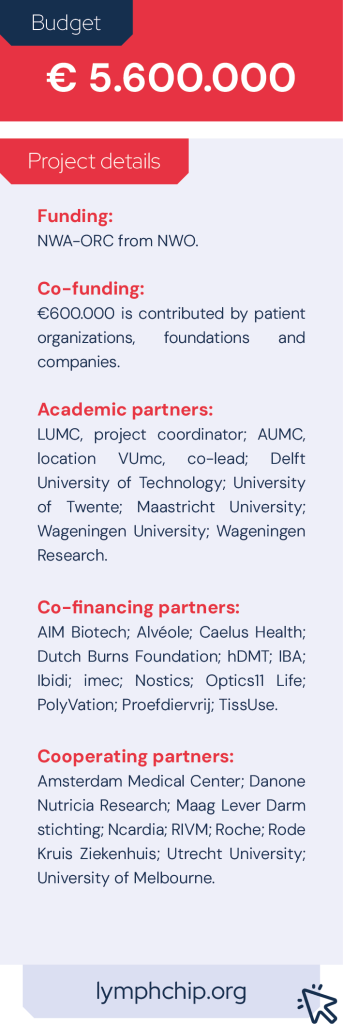
Project period 2021-2026


Research
Publications
Scientist in the spotlight
Blog
Funding opportunities
hDMT Agenda
Click here for our cookie policy.