News & Events
Research & Publications
Research
Publications
Scientist in the spotlight
Blog
Funding opportunities
hDMT Agenda
Partners
Privacy policy
Click here for our cookie policy.

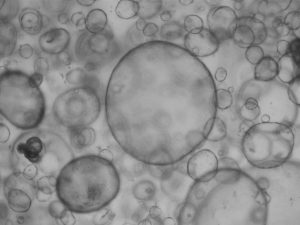
Mini-organs or organoids play a big role in the future of medicine. Their countless applications can help develop and implement tailored therapies for each patient. The revolutionary development of organoids started in Utrecht with a group of curious scientists. But when organoid research started booming, confusion arose. What exactly is an organoid? Are there different types, and if so, what should they be called? A group of experts from around the world now publishes the first consensus on what is – and what is not – an organoid. Bart Spee, Associate Professor at Utrecht University’s faculty of Veterinary Medicine, is...
Read more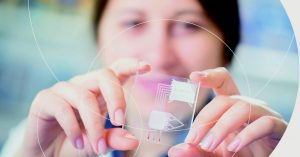
Modeling and Treating Eye Diseases in a Dish (RoC-ME) Alex Garanto (Radboudumc) together with Anneke den Hollander (Radboudumc) and Andries van der Meer (UTwente) have received 1,17M€ grant to develop a retina-on-chip model that allows the identification of molecular, biochemical and functional measurements to characterize disease pathophysiology and assess treatments for Inherited Retinal Diseases, Age-related Macular Degeneration and Neurometabolic Diseases. With the contribution and support of Boehringer Ingelheim, Locsense, Proefdiervrij and hDMT Organ-on-Chip consortium. The Partnership programme Human Measurement models 2.0 for research into the treatment and/or prevention of diseases is funded by the Association of Collaborating Health Foundations (SGF)...
Read more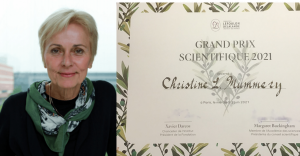
Congratulations to professor Christine Mummery from Leiden University Medical Center in the Netherlands who is co-recipient of the 2021 Scientific Grand Prize from the Lefoulon-Delalande Foundation of the Institut de France. The second laureate is professor Gordon Keller from the McEwen Stem Cell Institute and Princess Margaret Cancer Centre in Canada. The prize is 600,000 Euros and will be equally shared between the two laureates. Each year, the Grand Prize is awarded to a world-leading researcher who has made significant contributions to cardiovascular research and medicine. Christine Mummery received the prize for her pioneering work on the production of different cardiac cell...
Read more
hDMT contributed to an exploration by ZonMw for a Dutch research program for innovations without laboratory animals. The exploration was presented to minister Schouten (LNV) on 19 May 2021. On 19 May 2021 minister Carola Schouten of the Ministry of Agriculture, Nature and Food Quality received from Jeroen Geurts, chairman of ZonMw, an exploration for a Dutch research program for innovations without laboratory animals. Jeroen Geurts emphasized the conclusion from the exploration that more coordination and investment in research will help accelerate the transition to innovation without laboratory animals. The exploration is an initiative of ZonMw and the National Committee...
Read more
Wednesday, 2 June If you were not able to join the workshop Putting Science into Standards (PSIS) on standardization of Organ-on-Chip, please have a look at the presentations and discussions on the CEN-CENELEC website. On 28-29 April 2021 the Putting Science into Standards (PSIS) workshop on Organ-on-Chip was held online. This workshop was organized by CEN-CENELEC and JRC in collaboration with experts of the Advisory board, including members of hDMT and EUROoCS. Many stakeholders from the Organ-on-Chip field, including developers, regulators and end users from industry were guiding or actively contributing to the online discussions in the different parallel sessions...
Read more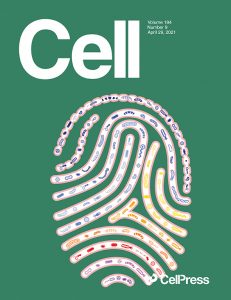
Trillions of microorganisms live in human intestine and form a complex ecosystem. This ecosystem can undergo dynamic changes over time by showing a shift in its composition or genetic alternation on genomes of different species. By comparing the gut microbial composition and genetic makeup four year apart, this study showed several novel aspects regarding the microbial stability and suggested different clinical implications in personalized medicine. Firstly, it was shown that a rich and diverse gut microbial community seems to be more stable over time. Secondly, genetic makeup of some species is very different between different individuals and can be stable...
Read more
Jingyuan Fu has been awarded a prestigious Vici grant from the Dutch Science Foundation (NWO) for her research project -Decoding the human genome and metagenome in cardiometabolic diseases This award provides 1.5 M Euro to fund a 5-year research project. The funded project will explore how the gut bacterial genome is involved in determining an individual’s risk of developing cardiometabolic disease. Like our own DNA, the thousands of bacterial genomes in our gut code for proteins that may contribute to, or reduce, our risk of disease. This research will identify variants in bacterial genomes, and their interactions with the human...
Read more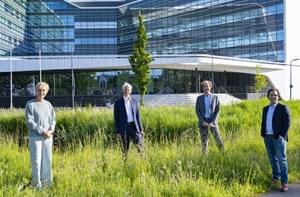
On April 9, the Cabinet announced that RegMed XB will receive a maximum of 56 million euros from the National Growth Fund for a regenerative medicine pilot plant. From the grant, 17 million euros will be allocated to the Netherlands Center for Clinical Advancement of Stem Cell & Gene Therapies (NecstGen) and the stem cell and organ-on-chip (iPSC & OoC) hotel at the LUMC. NecstGen and iPSC & OoC focuses on developing stem cell therapies and technologies for chronic diseases. Regenrative medicine aims to partially or completely restore the function of failing tissues or organs. In this way, life-long treatment...
Read more
Under a cross-disciplinary program spearheaded by the Swiss Federal Institute of Technology in Lausanne (EPFL), scientists from MESA+, among others, will develop an AI-based system that can predict whether Covid-19 patients will develop severe cardiovascular complications. In the longer term these systems can detect the likely onset of inflammatory disease. EPFL has launched a pan-European research program called Digipredict. The goal is to develop a digital twin that can detect serious complications in Covid-19 patients, employing breakthrough technology in the fields of artificial intelligence, smart patches and organs-on-chips. The initiative brings together around a dozen partner organizations (universities, hospitals and...
Read more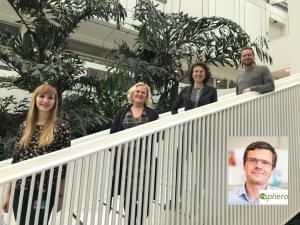
In February, the postdoctoral scientist Franziska Linke joined the group of PI Dr. Wytske van Weerden within the Department of Urology at the Erasmus MC Rotterdam to work on the project “Building a multi-tissue microfluidics system of metastatic potential (BIOMEP)”, as part of the programme Human Measurement Models 2019: towards better human measurement models. The aim of the BIOMEP project is to establish a bioassay that allows to study the invasive potential of prostate cancer cells into different human healthy micro-tissues such as liver and bone. The fully humanized 3D microfluidics system will identify tumor cell and tissue factors that...
Read more


Research
Publications
Scientist in the spotlight
Blog
Funding opportunities
hDMT Agenda
Click here for our cookie policy.