News & Events
Research & Publications
Research
Publications
Scientist in the spotlight
Blog
Funding opportunities
hDMT Agenda
Partners
Privacy policy
Click here for our cookie policy.

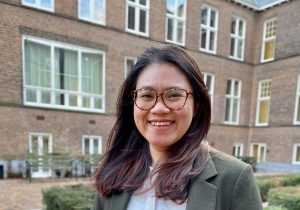
Sekar Galuh is a new PhD student at LUMC since January 2021. Her research will mainly focus on implementing induced pluripotent stem cell studies in fundamental research on central serous chorioretinopathy. She will be supervised at LUMC by prof. C.J.F. Boon, prof. O.C. Meijer, and dr. E.H.C. van Dijk. The PhD trajectory of Sekar is a collaboration project with prof. R.O. Schlingemann and dr. I. Klaassen from Amsterdam University Medical Center.
Read more
hDMT has received funding (50k euro) from the program ‘Small projects for routes of the Dutch Research Agenda 2020 (NWA)’. With this grant a detailed business plan will be developed for a long-term self-sustainable Organ-on-Chip (OoC) infrastructure in the Netherlands (hDMT INFRA). hDMT has received funding (50k euro) from the program ‘Small projects for routes of the Dutch Research Agenda 2020 (NWA)’. With this grant a detailed business plan will be developed for a long-term self-sustainable Organ-on-Chip infrastructure in the Netherlands (hDMT INFRA) with non-profit Expertise and Facility Centers within a national infrastructure framework. Case studies of the first...
Read more
Dirk Lefeber (Radboudumc) receives a Vici grant worth 1.5 million euros. He will use this grant to investigate why sugar metabolism differs between organs by use of stem cell models of muscle and brain. This will provide him with essential information to develop high-precision sugar therapies to treat patients with severe illness due to defects in suger metabolism. Glucose is well known as energy source. However, at least nine other sugars, such as mannose and sialic acid, are used for incorporation into human proteins. We call this process ‘glycosylation’. Abnormal glycosylation has been linked to a wide range of human...
Read more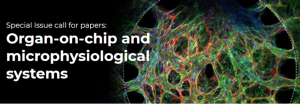
As a result of the alliance with EUROoCS, Stem Cell Reports welcomes manuscripts on innovative studies incorporating stem cells or their derivatives into Organ-on-Chip and microphysiological systems. Topics include applications for functional genomics and disease modeling, and basic studies of cell interactions in tissue microenvironments during development or adult life, including the assessment of the influence of the physical environment on cell behavior. Submission To inquire about the suitability of a potential submission, please email stemcellreports@isscr.org. Authors who have never submitted a paper to Stem Cell Reports (SCR) need to register on the SCR website and follow the standard submission process. Please mention your...
Read more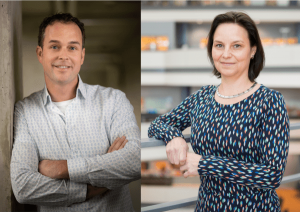
Per 1 January 2021 Utrecht University (UU) has joined hDMT as a new partner. The representatives in the hDMT Consortium Assembly are Bart Spee and Tina Vermonden. Utrecht University (UU) has an excellent research infrastructure in the area of human and animal measurement models, with strong expertise in pharmaceutical sciences, regenerative medicine, and Organ-on-Chip technology. The UU shares a multidisciplinary infrastructure and key technology platforms (e.g., organoids, biofabrication, EV, IPSC, gene-editing) and develops advanced and patient-specific disease models to translate relevant drug targets. The models are translated into novel regenerative therapies based on e.g., living cell-, organoid-, biomaterial- driven and biofabrication-...
Read more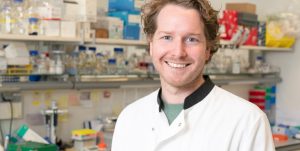
From April 2021 Berend van Meer has been appointed as member of the hDMT Executive Board. Being microelectrical engineer by training (Delft University of Technology) and with a PhD in stem cell biology (Leiden University medical Center; LUMC), Berend feels comfortable both in the biological and technological domain – a useful combination for Organ-on-Chip. Now appointed at both the LUMC and University of Twente, he is researcher but also working on research valorisation. His focus on qualification and standardization strongly links to the activities of setting up hDMT INFRA for Dutch Organ-on-Chip Research & Valorisation infrastructure. Involved in multiple (inter)national research,...
Read more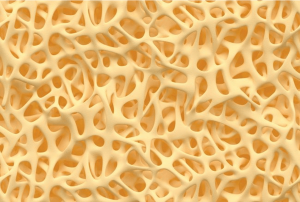
Researchers from Eindhoven University of Technology and Radboudumc have interwoven various bone cells into an ‘organoid’ that can independently make new, hard bone tissue. It’s the most complete 3D model of bone formation to date. The 3D model allows for the study of the key biochemical processes in unprecedented detail and could help in cracking the many mysteries surrounding bone formation. Moreover, the lab-grown bone is particularly suitable for testing and designing new treatments for bone diseases such as osteoporosis or osteogenesis imperfecta. Imagine using stem cells from your bone marrow to grow a new piece of your bone tissue...
Read moreWhy are you leaving hDMT? Since my arrival at hDMT in 2015 I have combined my 2-day position as its managing director with another position at the Lorentz Center. The combination of hDMT with the Lorentz Center has always been a natural balance. I believe in hDMT as an innovative and constructive research organization and I was therefore very happy to continue to be part of the hDMT management when I moved to manage the Mathematical Institute of Leiden University last year. However, it turned out that the Mathematical Institute requires my full-time commitment. I found it difficult to be...
Read moreSpring 2021 has brought changes in the hDMT organization. Mieke Schutte, managing director and member of the hDMT Executive Board, has left hDMT after five years. Mieke has been vital for building up the hDMT consortium in its current form, by stimulating scientists from academia and companies to collaborate and develop Organ-on-Chip models. As crown on her work the 4.8 M euro SMART OoC project was awarded by NWO to a multidisciplinary team of 10 researchers affiliated with hDMT and 26 private partners. The prestigious grant enables standardization as the next step in maturation and acceptance of Organ-on-Chip technology. We are...
Read more
The European Partnership for Alternative Approaches to Animal Testing (EPAA) supports students and young scientists with outstanding work in the field of alternative approaches to attend a high-profile scientific event. Every year, several high-profile international meetings bring together world-class scientists working on the development and acceptance of 3R alternatives to animal testing (Replacement, Reduction or Refinement). Costs linked to participation may prevent students with promising work or young scientists at the beginning of their career from attending these events. The EPAA partners are therefore happy to sponsor the 3Rs student grants to facilitate the participation of students and young scientists in such...
Read more


Research
Publications
Scientist in the spotlight
Blog
Funding opportunities
hDMT Agenda
Click here for our cookie policy.